
Motors
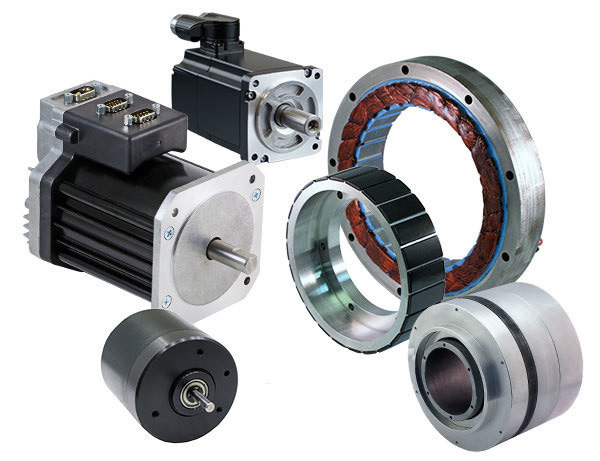
Electric motors are a key component of all automation. An electric motor converts electrical energy into mechanical energy.
Electric motors may contain:
- A rotor - a moving component with thin sheets of stacked metal called laminations that turns the shaft and delivers mechanical power.
- A stationary stator which consists of a group of electromagnets or permanent magnets with laminations in the stator core
- Windings - wires of a coil wrapped usually around a laminated iron magnetic core
- A commutator - a cylindrical device with contact bars fixed to the rotating shaft of the motor and connected to the windings that switches inputs
- Brushes - current conducting material (usually carbon or graphite) that conducts current from the power supply to the windings.
Together, they generate force from the interaction between magnetic fields and winding currents. Most motors use either direct current (DC) sources like batteries, or alternating currents (AC) like power grids.
There are many different categories and designs of motors serving a huge variety of applications. Click the links below to learn more about the motors available from our member companies:
- AC Brushless Motors
- DC Brushed Motors
- DC Brushless Motors
- Direct Drive Motors
- Integrated Motors
- Linear Motors
- Servo Motors
- Stepper Motors
AC Brushless Motors
DC Brushed Motors
DC Brushless Motors
Direct Drive
Integrated Motors
Servo Motors
Stepper Motors
Linear Motors
Viewing Products: Motors
Show Per Page:
DISPLAY:

