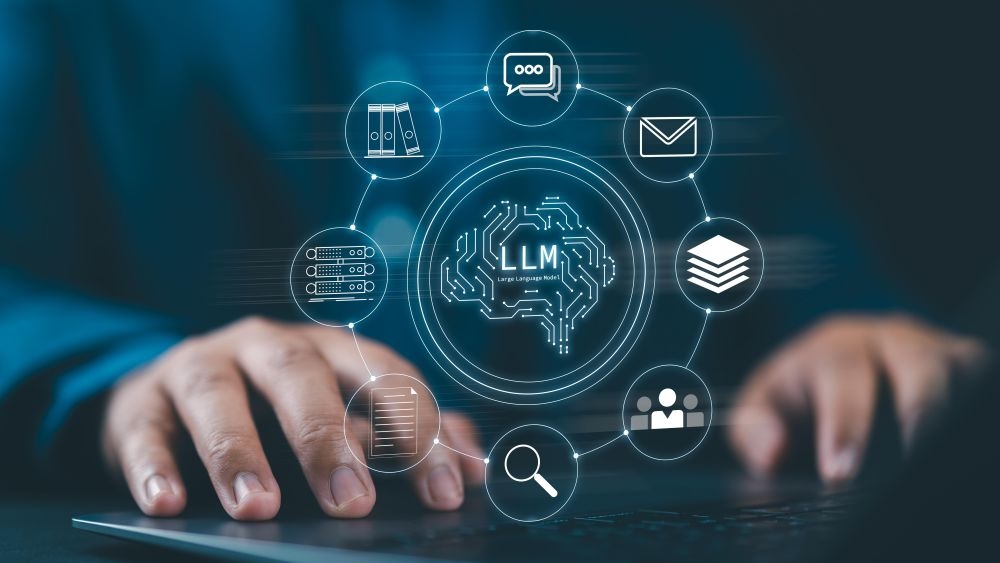
 AI is a broad field encompassing symbolic, machine learning, deep learning, and other technical approaches to creating smart systems that respond to external inputs. Large language models (LLMs) are a category of AI that uses deep learning, a subset of machine learning, and have rapidly accelerated in capability over the past five years. An LLM is an AI that has been trained on large volumes of data to learn pattern recognition. Given a prompt, the LLM can then write, continue, or optimize code based on the patterns it has learned. LLMs like ChatGPT specialize in natural language tasks and have become more valuable and practical in consumer and commercial applications.
The popular commercial LLM products can handle some coding, but specialized LLMs designed to be tightly focused on industrial automation coding can streamline automation commissioning and upgrades, reducing costs and downtime. With the rapid evolution of LLM-driven software development, Kristen Quasey, architecture and portfolio sales manager at Siemens, sees a future where this tech becomes an integral part of an engineer’s daily function within the automation space. “At Siemens, we are leveraging large language models and generative AI technologies to enhance engineering processes, including PLC code generation and HMI visualization development.” Siemens does this through the integration of their Industrial Copilot, enhancing workflow efficiency and productivity. Other automation companies, like ABB, Schneider Electric, and Rockwell Automation, have also incorporated AI copilots into their operations to provide real-time data, troubleshoot issues, and provide well-rounded automation support.
Natural-language prompt interfaces let engineers interact with systems by writing prompts in conversational language to generate or change automation scripts. LLMs can help write PLC scripts, robot motion snippets, test benches, or glue code (API calls, SQL queries). Automating repetitive coding speeds prototyping and removes boilerplate work, but generated code must be reviewed and tested in simulation or hardware-in-the-loop before deployment.
Eliminating Legacy Automation Development Challenges
Historically, industrial automation, often developed by high-cost consultants, was deployed directly onto physical hardware. That created several pain points well known to automation specialists. Logic bugs, motion path issues, collision risks, timing issues, or sensor challenges could only be discovered after the hardware was fully developed, deployed, and powered up.
Testing and deployment must operate in serial, meaning you need the PLC, robots, safety circuits, and tooling to go live. Any missing component meant you could not accurately verify the logic, slowing development until the mechanical and electrical tasks were finished. Besides the significant risks to safety and equipment, this process typically requires extensive downtime to identify the root cause, debug the issues, and resume testing. Problems are also often uncovered serially, with new errors detected after the previous issue was fixed, extending the commissioning period and impacting ROI. Manually coded changes to automation also need to be tested for each issue, further driving up costs. The serial, extended development loop is repeated for every upgrade or significant process change.
Modern design simulation, coupled with LLM-powered code for automation, rewrites this narrative. Simulation delivers the ability to test automation code alongside the machine design process, before commissioning starts. By employing LLM-based automated coding, rapid prototyping of automation scenarios can accelerate design and adapt to changes that arise during the design process. Parallelizing design and testing avoids costly rework when sensor placement, cycle times, pathing, or conveyor timing on new equipment proves unfeasible. These faulty scenarios would lead to time-consuming, expensive rework, and significantly extend commissioning time in traditional automation deployments.
LLM automation accelerates coding for design and process updates, leveraging simulation to ensure code is ready for production. LLMs don’t replace automation engineers; they reshape workflows to be fast, iterative, and parallel. Writing boilerplate PLC logic, drafting motion templates, generating tag dictionaries, creating HMI interfaces, and documentation adds massive cost and time to legacy automation coding. These rudimentary, repetitive tasks are ideal for LLMs to handle, allowing automation engineers to focus on process-specific code and high-precision tasks.
“LLM-powered coding shifts development from manual coding to a prompt-based approach, reducing repetitive work and accelerating development cycles,” Kristen expands. “In their natural language, users can ask the copilot to support them in completing engineering tasks. This gives automation engineers the ability to work faster while minimizing errors. Additionally, onboarding new engineers becomes more efficient, as the copilot serves as an always-available digital assistant, providing guidance and support throughout the engineering process.”
LLMs can also suggest structures and motion code that can be refined by experienced engineers, streamlining planning phases while engineers expand and customize those suggestions. Limited automation expertise on the shop floor often requires bringing in outside automation consultants or integrators to implement process changes in legacy deployments. LLMs for automation, allowing customization via natural-language prompts and testing based on established process simulations, empower manufacturers to make processes more agile and meet shifting demand.
LLM Challenges: Understand the Risks
LLM code development has significant potential to add value, but it also introduces risks that must be mitigated. LLMs can produce code that appears correct and meets expected conditions, even though it is logically incorrect. This can be as simple as subtly broken sequences and as dangerous as unsafe robot movements or collisions.
LLMs have been identified as hallucinating missing details, inventing addresses that don't exist, or tags that violate your namespace. Without precise application-specific tuning or carefully constructed prompt parameters, LLMs can be error-prone. For instance, an LLM can write code that sets accelerations faster than a servo can permit, or code movements that exceed a robot’s reach. LLMs might confuse sequencing order or suggest sensor logic that can’t physically work.
Robust code verification and debugging are necessary for any segment of code generated by an LLM before it is even applied to simulation testing. LLM errors can also compound. If the LLM's initial output is not validated and tested, subsequent iterations can amplify the issue, creating a cascade of problems. LLMs are potent tools that can vastly accelerate operations, but, like any powerful tool, strict operating procedures are required, and prescribed workflows need to be in place to ensure LLMs are used safely and effectively to enhance an engineering team rather than impede it.
Kristen described user adoption as another integration hurdle. “It is essential for users to recognize that these tools are designed to support decision-making and accelerate workflows, not replace human judgment. While LLMs provide valuable insights and starting points for engineering, outputs should be verified to ensure they meet the user’s standards. To build trust between users and LLM solutions, clear guardrails within the LLM should be established, reviewing answers should be encouraged, and training should be available.”
She encourages decision-makers looking to integrate LLM software tools into their processes to take the plunge and give it a try. “Get started in a controlled environment where some of your key engineers can test out the solutions, verify the answers being provided, and build confidence in the tools. As AI technology continues to advance, it is essential to start familiarizing yourself with its capabilities rather than risk being left behind.”
Securing Buy-In for Your AI Initiatives
Increasing the effectiveness of AI deployments always has a cultural component — getting organizational buy-in starts with the “why” and “how” for LLM AI tools. LLMs cannot replace automation engineering experts, but they can be powerful tools when used effectively. By creating an engineering pilot team to evaluate different solutions, define use cases, set success metrics, and establish best practices, organizations can ensure that AI tools are used most effectively. This pilot team can also optimize deployment and buy-in processes by integrating the tool into the existing workflow, leveraging inside knowledge, and gaining a clear understanding of the toolsets' strengths and limitations. This pilot group can also lead the training efforts, directly introducing the tools to the rest of the company.
LLMs have the potential to revolutionize how industrial automation is designed, validated, and deployed. By shifting repetitive coding tasks, documentation, and early-stage logic development to LLM-powered workflows, manufacturers can drastically reduce commissioning times and the associated costs. Paired with robust simulation environments for testing, parallel design-and-test loops can catch issues early on, transforming a serial design and deployment process into an agile, iterative one.
This toolset requires disciplined engineering oversight to ensure that outputs are reviewed, validated, and simulated for accuracy and safety. Manufacturers won’t be replacing engineers with AI; they'll be empowering engineers with a force multiplier to enhance speed and adaptability. As manufacturers adopt LLM-assisted development, they will gain a competitive advantage, enabling them to innovate faster and adapt to change through future-proof operations.